

You don’t need to be a math genius to win at Rummy. All you need is a solid grip on the basics-and from there, the game is yours. Once you understand the rules, the scoring, and a few beginner strategies, you'll already be ahead of most other players.
You might think you don’t need this, but darling, it won’t cost you a single penny. Why not check it out? Who knows? This might help you identify the mistakes you’re making.
Learn Rummy rules 13 card in 30 seconds
Rummy isn’t as difficult as it looks. All you have to do is draw cards and group them, and boom—you've learned the basics.
Each player gets 13 cards. And you have to organize them into sequences and sets.
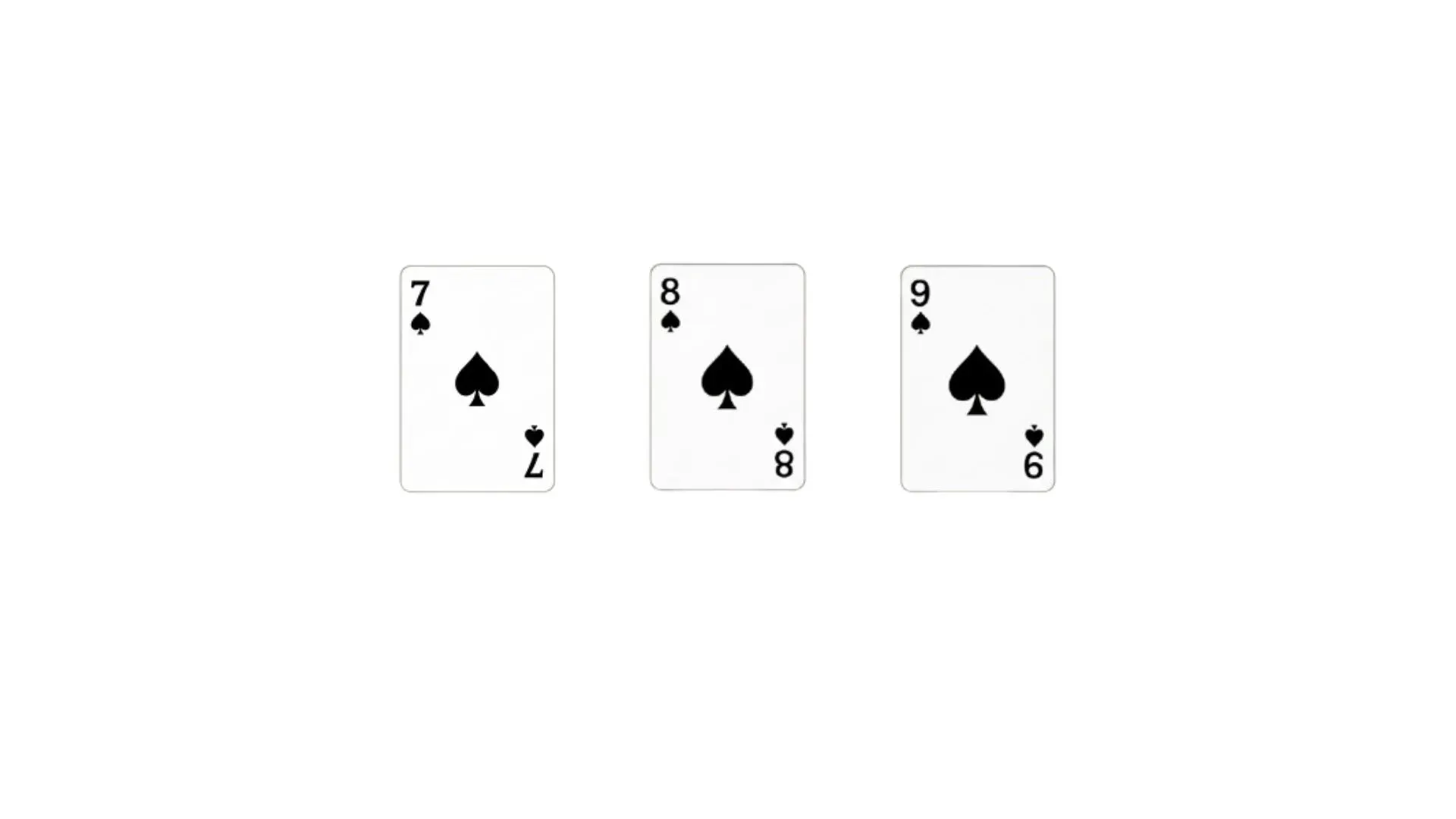
- Sequence → Three or more consecutive cards of the same suit. Example: 7♠ 8♠ 9♠.
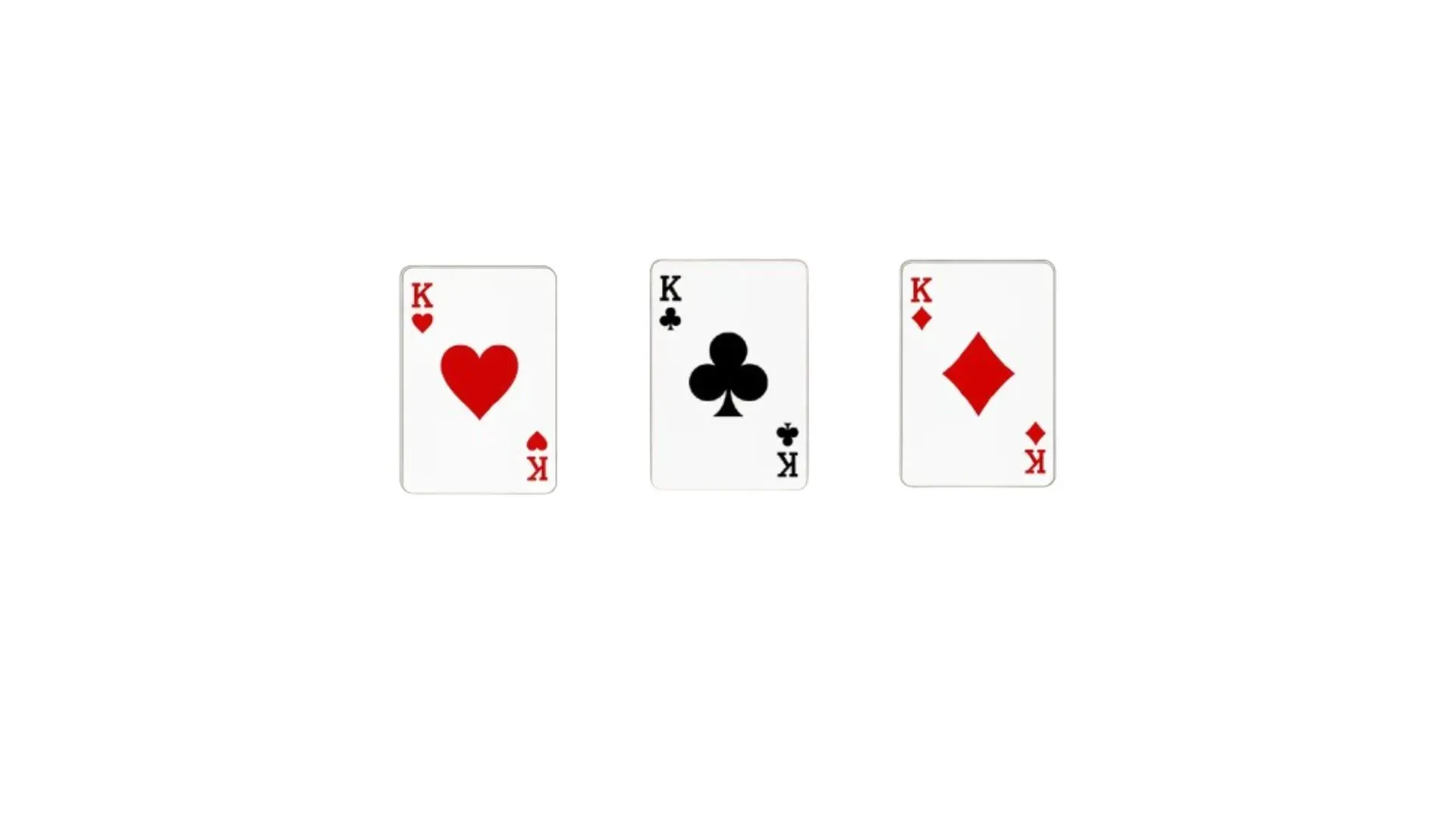
- Set → Three or four cards of the same rank but different suits. Example: K♥ K♣ K♦.
Rummy Setup & Joker Rules
Setup:
- Players: Between 2 and 6.
- Decks Used: Two (standard 52-card decks, plus jokers.)
- Cards Dealt: Each player gets 13.
Jokers in Indian Rummy:
At the start of the game, one random card is selected as the wild joker, and all cards of that rank (regardless of suit) become jokers for that game. Printed jokers in the deck are also used as wild cards.
✅ 1 Deck Game (for 2 players):
- 2 Printed Jokers
- 1 Wild Joker (randomly chosen card that acts as a joker) ➡️ Total Jokers = 3
✅ 2 Deck Game (for 3-6 players):
- 4 Printed Jokers (2 per deck × 2 decks)
1 Wild Joker (common across both decks) ➡️ Total Jokers = 5
Jokers can stand in for any missing card when forming a set or an impure sequence, but they’re never allowed to form a pure sequence.
Q Is a Joker compulsory in every hand?
A: No. Pure sequences can’t include jokers, but you may use jokers in other sets or sequences where allowed.
How the Game is Played
Basically: Draw → Arrange → Discard → Declare.
Here’s what happens in every round:
- Dealing - Each player receives 13 cards.
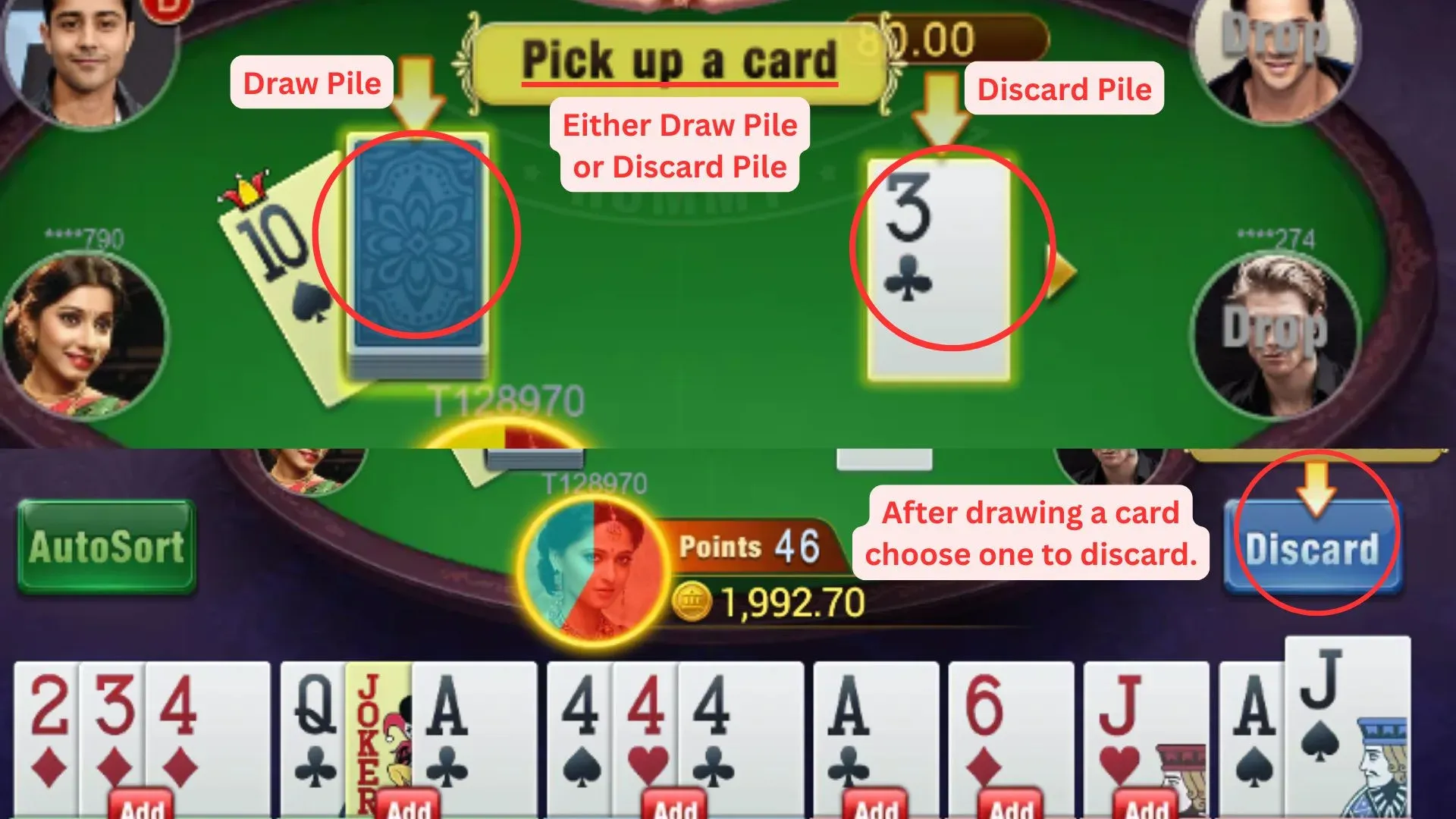
- Draw Pile - The face-down stack of undealt cards.
- Discard Pile - The face-up stack where players throw away cards.

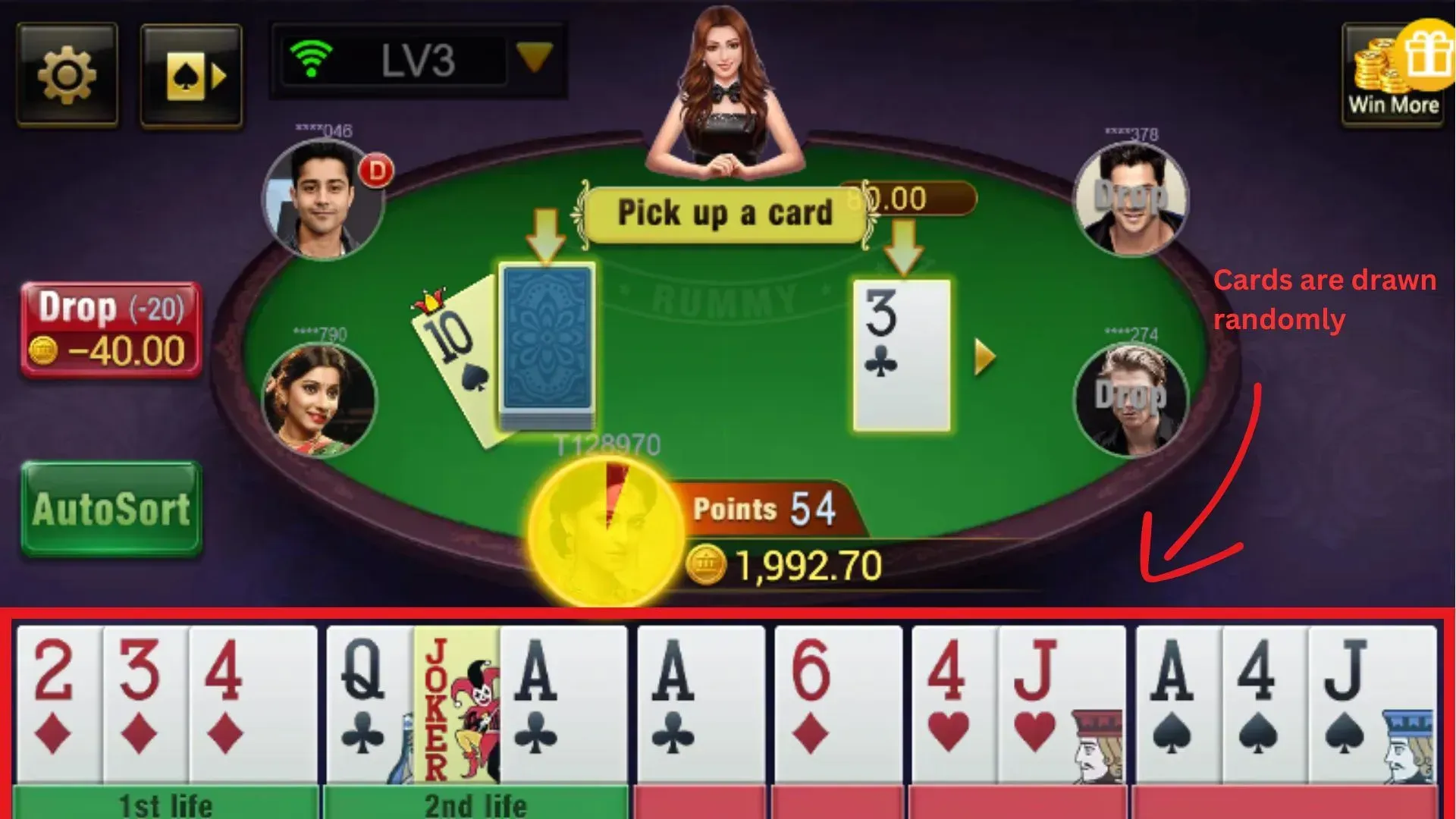
On your turn:
- Draw one card - either from the draw pile or the discard pile (only the top card from the discard pile can be picked).
- Arrange your hand into valid sequences and sets.
- Discard one card and place it in the discard pile.
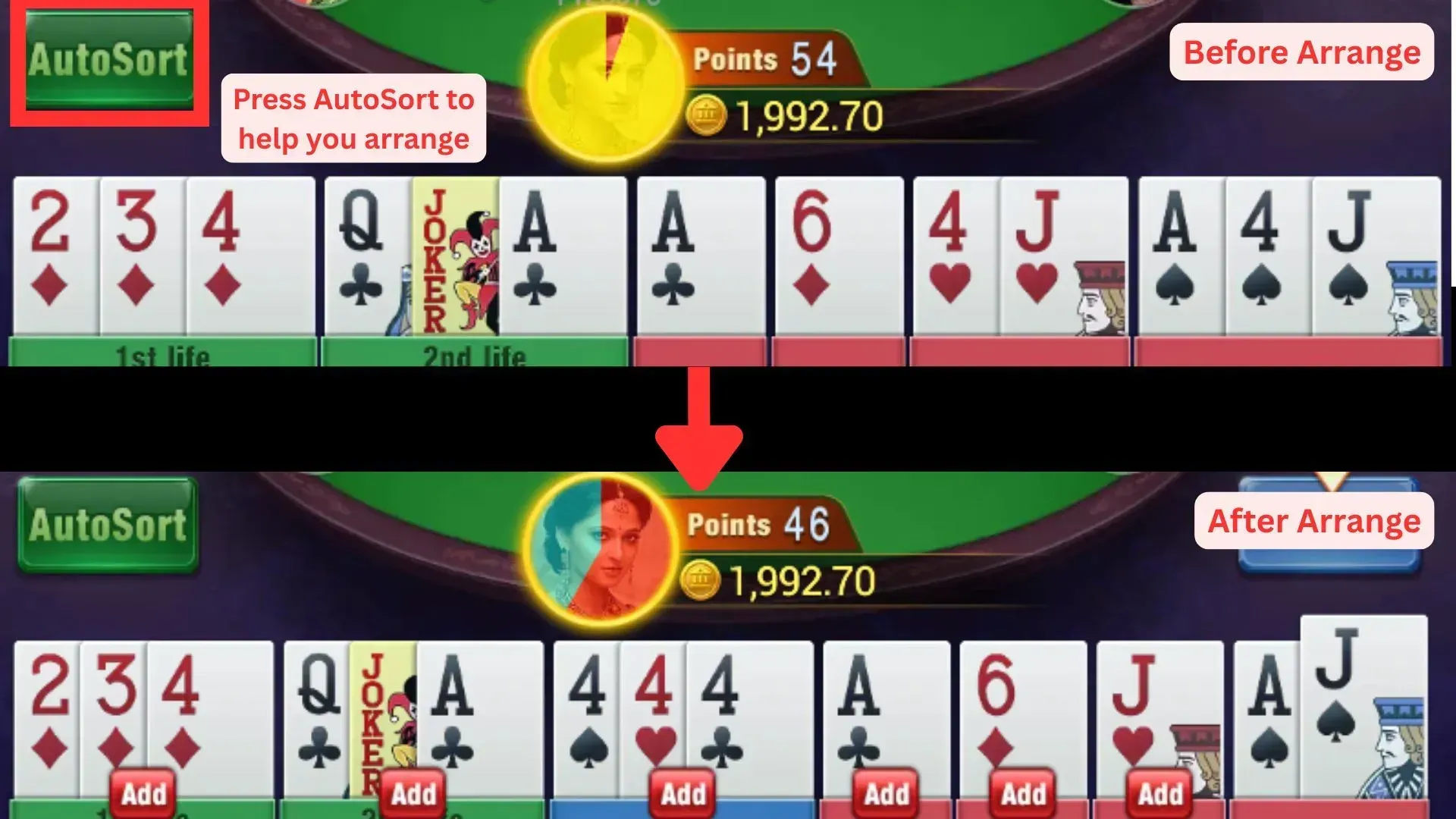
Declaration - How to win:
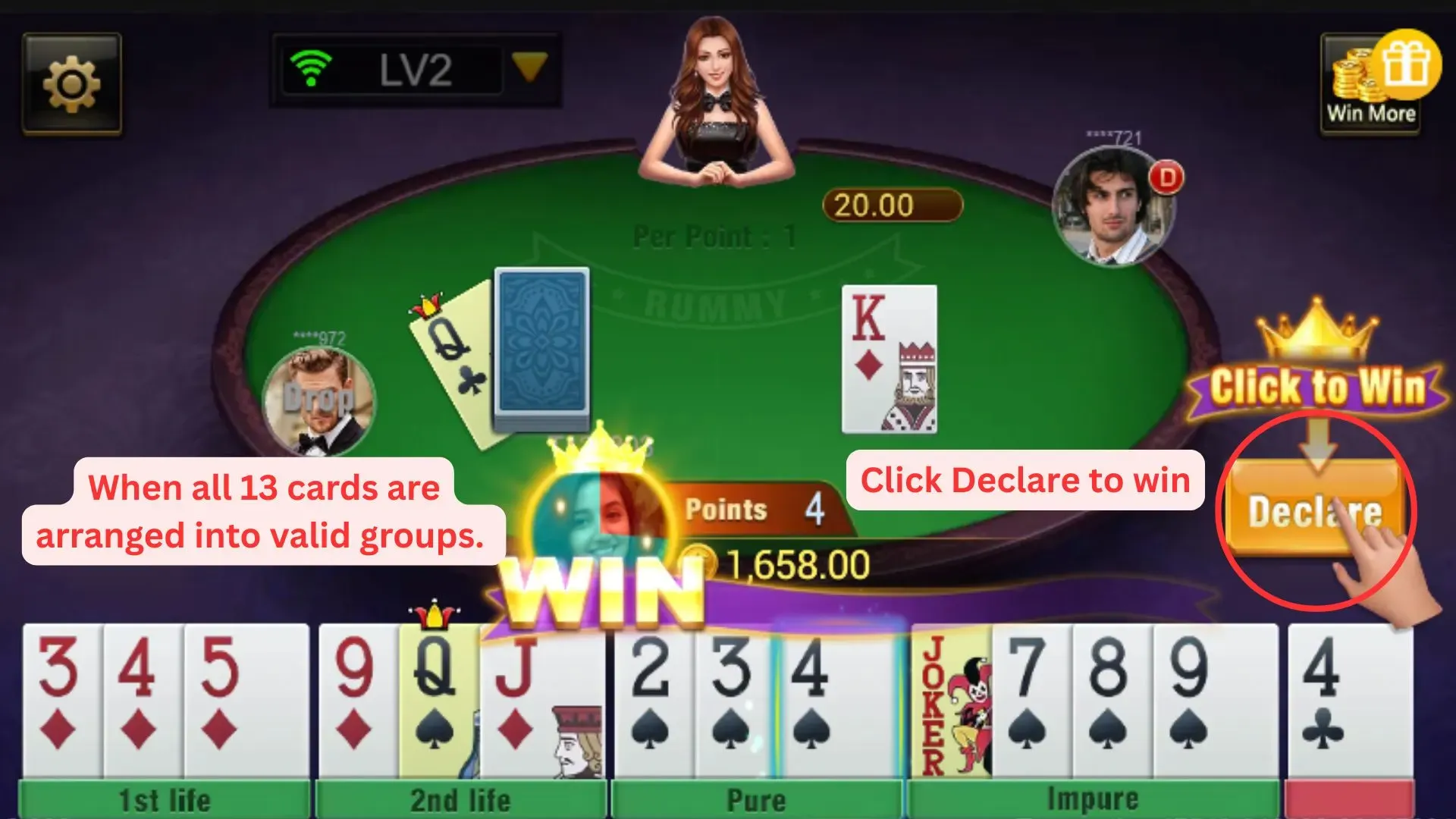
- You can declare only when all 13 cards are arranged into valid groups.
- You must have at least two sequences, and one of them must be pure (without jokers).
- The rest of the cards can be in more sequences or valid sets.
- If even one card is left unmatched, your declaration is invalid and you’ll get penalty points.
Q What happens when both players declare at the same time in Rummy?
A: Both players show their cards. If either declaration is invalid, that player gets the maximum penalty. If both are valid, it’s treated as a tie and the reward may be split (platform rules can vary).
Q What happens if I wrongly declare?
A: You receive the maximum penalty defined by the room. In many online points-rummy games this is 80 points, though exact values may vary by platform.
Online India Rummy - Example of Valid Hands
To form a valid hand in online India Rummy, you must use all 13 cards to create at least two sequences, with one sequence being pure. Below are examples of valid and invalid hands.
Rummy Valid Hands:
- ♥️4♥️5♥️6 (pure sequence), ♥️6♣️7♦️8♣️9 (sequence), ♣️Q♥️K♥️A, ♠️8♥️8♣️8
- ♠️4♠️5♠️6♠️7 (pure sequence), ♥️6♣️7♦️8 (sequence), ♣️4♦️4♥️4, ♠️8♥️8♣️8
- ♣️2♣️3♣️4♣️5♣️6 (pure sequence), ♣️7♦️8♦️9♣️10♥️J (sequence), ♠️A♥️A♣️A
Rummy Invalid Hands:
- ♥️4♠️5♠️6♠️7 (sequence), ♥️6♣️7♦️8 (sequence), ♣️4♦️4♥️4, ♠️8♥️8♣️8 (no pure sequence = invalid)
- ♠️4♠️5♠️6♠️7 (pure sequence), ♥️2♣️2♦️2, ♣️4♦️4♥️4, ♠️8♥️8♣️8 (only 1 sequence = invalid)
Even if most of your cards are grouped, your declaration will be invalid if 1 or 2 cards are left unmatched.
Q What is a pure sequence in Rummy?
A: A pure sequence is a valid set of consecutive cards of the same suit with no jokers. Example 1: 4♠ 5♠ 6♠ 7♠. Example 2: J♥ Q♥ K♥.
Q Can a pure sequence in Rummy be made with 4 cards?
A: Yes. A pure sequence can be formed with 4 cards, 5 cards, or even 6 cards of the same suit — all are valid combinations.
Q Do you have to form a pure sequence first in Rummy?
A: No. You don’t have to form it first, but it’s smart to secure it early since a valid declaration requires at least two sequences, and one must be pure.
Q Can you declare in Rummy using only sets?
A: No. You must have at least two sequences, and one of them has to be a pure sequence.
Try Free Online Rummy DEMO
If you are still new to Rummy, no need to worry. We offer this DEMO version fro you to play it for free, no money wasting.
Once you get used to the rules and the gameplay, you can start playing online Rummy in real money!
Ready to win big? Get a free ₹48 bonus just by registering at Dubai7 or Parimatch today!

These trusted online casinos are offering an exclusive signup promotion where new players can instantly claim ₹48 free bonus cash.
Don’t miss this chance to enjoy secure, fast, and rewarding online casino gaming at Dubai7 and Parimatch.
Online Rummy Points System
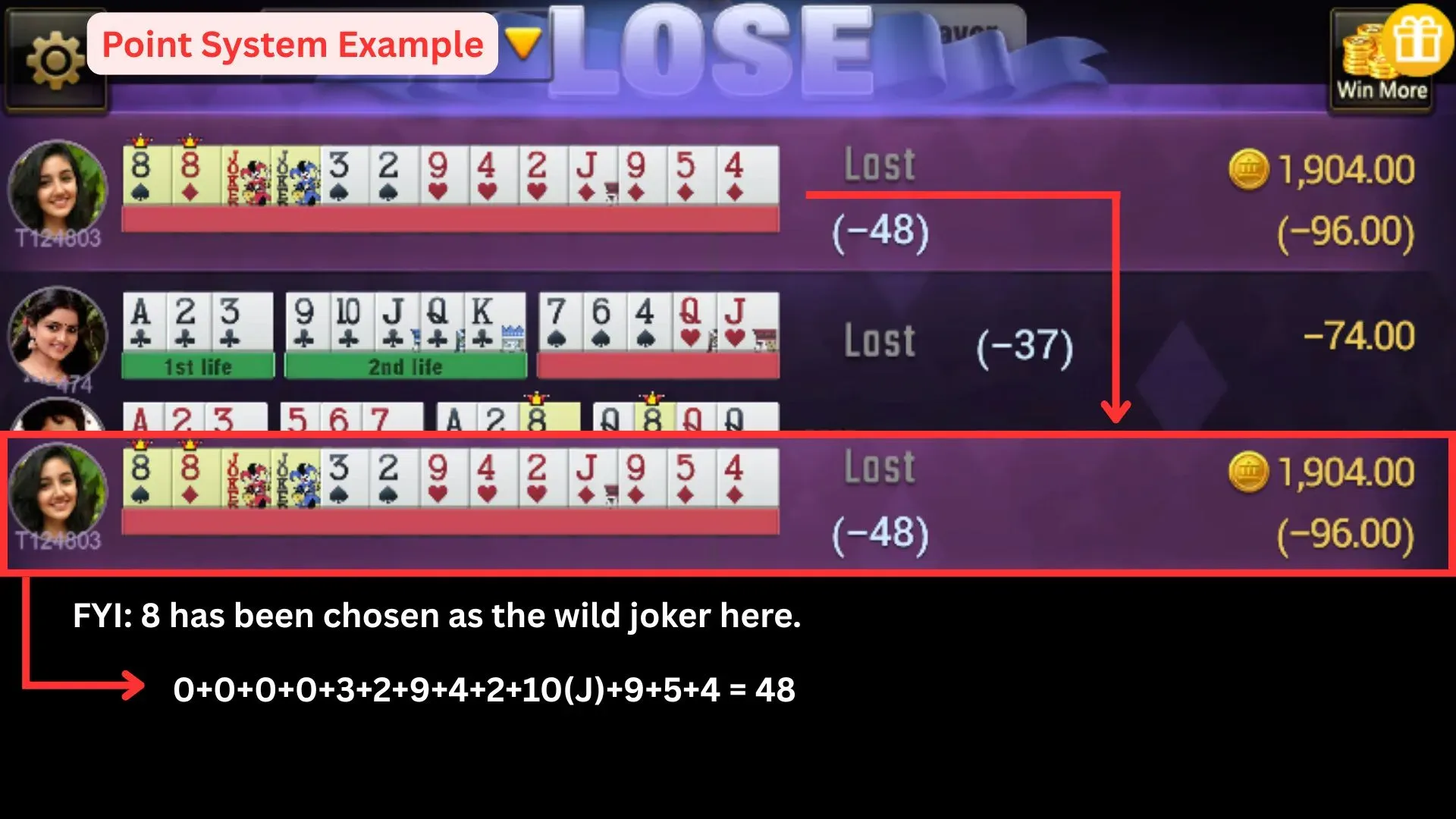
Don’t just focus on forming sets or sequences - you also need to avoid holding on to high-value cards. If your opponent declares before you, those Kings and Queens will hit you hard.
- Number cards (2-10) → Face value (e.g., 7♣ = 7 points).
- Face cards (A, K, Q, J) → 10 points each.
- Jokers (printed or wild) → 0 points.
Rummy details you must not forget
- Ace in Indian 13-Card Rummy → Counts as 10 points, same as face cards.
- Ace in some Rummy variants → May count as 1 point, or sometimes 15 if treated as high card.
- Jokers in Indian Rummy →
- Printed Joker: count as 0 points.
- Wild Joker: A random card chosen at the start (e.g., 7♦ → all 7s become jokers) counts as 0 points.
- Both can replace missing cards in sets/impure sequences (but never in a pure sequence).
Popular Variants of Indian Rummy
Once you master the basics, you’ll find that Rummy has multiple versions, each with its own thrill:
- Points Rummy → The quickest format, where every point has a pre-decided rupee value. Winners take the pot instantly. The most common Rummy gameplay you will see on most of the platform
- Pool Rummy → Played until players cross a set limit (101 or 201 points). One by one, players are eliminated until only one remains.
- Deals Rummy → Played for a fixed number of deals. At the end, the player with the lowest score wins.
Each variant tests your skill differently, and online platforms like DUBAI7 offers different Rummy included Pool Rummy and Points Rummy.


And don’t confuse Indian Rummy with Western Rummy, they might look the same, but the rules are quite different.
- Indian Rummy → 13 cards, two decks, jokers, pure sequence mandatory.
- Western Rummy (like Gin Rummy) → Usually 10 cards, single deck, different scoring, and often no jokers.
Must Learn Rummy Strategies and Tactics for Beginner
Here are five proven tactics that you can keep in mind:
- Lock the Pure Sequence First
Without a pure sequence, your declaration is invalid. Secure it early so you’re always safe to finish later. - Don’t Hoard High Cards
Aces, Kings, Queens, and Jacks look powerful, but they can sink you. Unless they fit in a sequence fast, get rid of them before they cost you points. - Jokers Are Gold-Save Them
Jokers are your insurance policy. Use them to complete tricky sets or impure runs, not in pure sequences where they’re useless. - Observe Opponents
Pay attention to what others pick from the discard pile. Never throw away cards that help your rivals, and sometimes bluff by discarding cleverly. - Middle Cards Are Flexible
5s, 6s, and 7s fits into more sequences than Aces or Kings. Keeping them gives you flexibility as the game develops.
Q Is Rummy luck or skill?
A: Luck decides the cards you’re dealt, but skill decides how you play them. Indian courts recognize Rummy as a game of skill.
Q Where can I play online Rummy for real money?
A: Popular options include Vegas11, Stake, Dubai7, and BC.Game. Each offers strong bonuses, variety, and reliable payments for Indian players—always check local laws and site terms.
Q What is the minimum bet amount for real-money Rummy?
A: It varies by platform and game type; commonly in the ₹8–₹80 range in online rooms.
Q What is the minimum entry for JILI Rummy?
A: Typically ₹80, though this can change with table limits, app versions, or promotions.
Recommended for You
