The IPL auction is where teams build their squads and bidding wars create headlines long before the season begins. With franchises competing for the best talent, the event has become one of the most anticipated parts of the IPL calendar.
But how does the IPL auction work? Here’s everything cricket fans need to know.
What Is the IPL Auction?
The IPL auction is a player recruitment system used by the Indian Premier League. Instead of players freely joining any team, franchises bid for cricketers from a central pool of available players.
Each franchise receives a fixed budget, often referred to as a purse, which they must use to assemble their squad. Teams compete against each other by placing bids, and the highest bidder wins the player.
- The auction system is designed to maintain competitive balance throughout the league while preventing wealthier franchises from dominating the player market.
Over the years, the IPL auction has become one of the most anticipated events in world cricket, generating excitement long before the season begins.
Why Does the IPL Use an Auction System?
Unlike many sports leagues where players are transferred directly between clubs, the IPL uses an auction to create a more balanced competition.
The auction system helps:
- Distribute talent across all teams
- Prevent one franchise from signing every top player
- Encourage strategic squad building
- Maintain financial discipline through salary caps
- Give emerging players opportunities alongside established stars
Because every team works within a limited budget, success depends not only on spending power but also on smart planning and scouting.
How Do Players Enter the IPL Auction?
- Step 1: Players Register for the Auction
Before the auction takes place, players who want to participate must register for the upcoming IPL season. During registration, they submit their availability and select a base price—the minimum amount teams can bid for them.
- Step 2: Franchises Submit Their Interests
Once registrations are complete, IPL franchises review the list of available players and identify those they may be interested in signing. Teams submit their preferences to help determine which players should appear in the auction.
- Step 3: The Final Auction List Is Prepared
Not every registered player makes it into the live auction. Based on franchise interest and other selection criteria, a final shortlist is created for the auction event.
- Step 4: Players Enter the Auction Pool
The shortlisted players are then placed into the auction pool. When auction day arrives, their names are presented one by one for franchises to bid on.
As a result, while hundreds of players may register, only a selected group ultimately appears in the live IPL auction.
What Is a Base Price?
One of the most important terms you’ll hear during the IPL auction is “base price.”
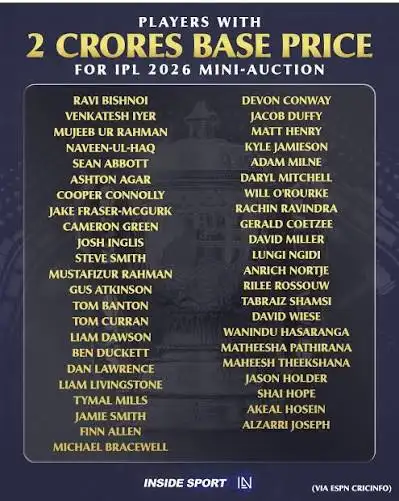
A base price is the minimum amount at which bidding for a player can begin. Players choose their own base price during registration, and franchises cannot bid below that figure.
For example:
- A player with a base price of ₹50 lakh can only be purchased for ₹50 lakh or more.
- A player with a base price of ₹2 crore can only be purchased for ₹2 crore or more.
Interestingly, a high base price does not guarantee a higher final salary. Teams often prioritize current form, role suitability, age profile, and long-term value over reputation alone. Many players with lower base prices have gone on to secure massive contracts after intense bidding wars.
How Does the Bidding Process Work?
When a player’s name is called, the auctioneer announces their base price and invites franchises to start bidding. Teams signal their interest by raising their paddles, and the bidding continues in fixed increments.
As the price rises, some franchises drop out while others continue competing. Eventually, only one team remains willing to pay the final amount.
That franchise wins the player and the final bid amount is deducted from its remaining purse.
For example:
- A player enters with a base price of ₹2 crore.
- Several teams begin bidding.
- The price rises to ₹10 crore, ₹15 crore, and beyond.
- One by one, teams stop bidding.
- The final remaining franchise secures the player.
What Is an IPL Auction Purse?
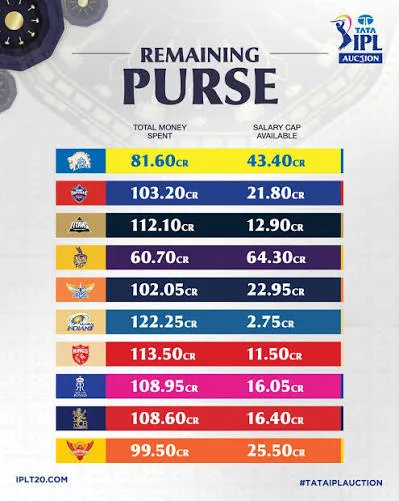
Every IPL franchise operates under a fixed spending budget known as the auction purse.
Think of it as a shopping budget. Once a team spends money on a player, that amount is deducted from its remaining funds. Teams cannot exceed their allotted purse, which forces them to carefully balance star signings with affordable squad options.
For example, if a franchise starts with a purse of ₹100 crore and spends ₹20 crore on a star player, only ₹80 crore remains for the rest of the squad.
How Do Teams Decide Which Players to Buy?
The IPL auction is far more strategic than simply chasing famous names.
Months before the auction, teams conduct extensive scouting and analysis. Coaches, scouts, analysts, and management staff identify areas that need improvement and create target lists.
Factors franchises consider include:
- Current form
- Batting or bowling role
- Injury history
- Age profile
- Overseas player availability
- Team balance
- Home ground conditions
- Long-term development potential
Many teams also create backup options in case their primary targets become too expensive during bidding.
Squad Rules Every Team Must Follow
The IPL auction is governed by several squad-building regulations.
Teams must operate within restrictions related to:
Squad Size
Every franchise must maintain a squad within the league’s minimum and maximum player limits.
Overseas Player Limit
Although teams can sign overseas cricketers, there is a limit on how many foreign players can be included in a squad and how many can be used in the playing XI during matches.
This ensures Indian talent remains at the center of the competition.
Because of these restrictions, overseas fast bowlers, all-rounders, and power hitters often become highly sought-after auction targets.
What Happens If a Player Goes Unsold?
Not every player receives a bid. If no franchise is willing to meet a player’s base price, that player is declared unsold.
However, their IPL dream is not necessarily over.
Unsold players can sometimes reappear during accelerated auction rounds, where franchises revisit previously overlooked names.
Additionally, players who registered for the auction may later be signed as replacement players if injuries occur during the season.
Several successful IPL careers have started after players initially went unsold.
Mega Auction vs Mini Auction
One area that often confuses new fans is the difference between mega auctions and mini auctions.
Mega Auction
A mega auction is a large-scale squad reset that usually occurs after several seasons.
Before the auction, franchises are allowed to retain only a limited number of players. Most of the league’s talent then returns to the auction pool, giving teams an opportunity to rebuild from scratch.
Mega auctions often produce the biggest bidding wars and the most dramatic team transformations.
Mini Auction
A mini auction is much smaller. Teams largely keep their existing squads and focus on filling specific gaps through targeted signings.
Mini auctions are generally used to strengthen weak areas, replace released players, or add depth to the roster.
- Mega Auction = Major squad rebuild
- Mini Auction = Fine-tuning the squad
Why Do Some Players Cost So Much?
Every IPL auction features a few jaw-dropping purchases.
The reason is simple: supply and demand.
Certain player types are extremely difficult to find, particularly:
- Fast-bowling all-rounders
- Elite death bowlers
- Match-winning finishers
- Aggressive opening batters
- Multi-format international stars
When several franchises need the same type of player, bidding wars can quickly escalate.
A player’s final price often reflects market demand rather than pure cricketing ability. Teams are paying for a specific role that they desperately need to fill.
Why the IPL Auction Is So Popular Among Fans
The IPL auction is much more than a player recruitment event—it’s a spectacle that generates excitement long before the tournament begins.
Every year, fans eagerly watch as franchises battle to secure the players they believe can help deliver a championship.
What Makes the IPL Auction So Exciting?
Some of the biggest attractions include:
- Record-breaking contracts that make headlines around the world.
- Intense bidding wars between rival franchises.
- Surprise signings that nobody sees coming.
- Young talents earning life-changing opportunities.
- Star players going unsold, often shocking fans and experts alike.
- Team-building strategies that reveal each franchise’s plans for the upcoming season.
Record-Breaking Auction Examples
The IPL auction has produced some astonishing deals over the years. For example:
- Rishabh Pant became the most expensive player in IPL auction history after being sold for ₹27 crore.
- Mitchell Starc attracted fierce competition and secured a deal worth ₹24.75 crore.
- Cameron Green also commanded a massive fee, highlighting the high demand for quality all-rounders.
These blockbuster purchases often dominate cricket headlines and become major talking points among fans.
It’s Not Always About the Biggest Stars
While record-breaking signings grab attention, some of the auction’s most memorable moments come from unexpected outcomes.
A relatively unknown player can suddenly attract bids from multiple teams, while an established international star may receive no bids at all. These twists and surprises are what make the auction so unpredictable and entertaining to watch.
Watch Your Favorite Sports Live For FREE!
Dubai 7 offers access to a variety of online sports platforms and lounge rooms, giving sports fans multiple ways to follow their favorite events. Whether you’re interested in football, cricket, basketball, tennis, or other major competitions, you can choose the sports room that best matches your interests.
With coverage across different sporting events and leagues, users can stay updated with live action, match schedules, and the latest developments from around the world. The wide selection of sports platforms makes it easy to find the events you want to follow in one convenient place.
To enhance the overall experience, Dubai 7 also regularly offers promotions and special rewards for its members.
IPL Auction FAQs
What is the IPL auction?
The IPL auction is a player recruitment system where franchises bid for cricketers from a pool of available players. The highest bidder secures the player’s services for the upcoming season.
How do players enter the IPL auction?
Players must register for the auction and select a base price. After registration, a final shortlist is created, and selected players are included in the live auction.
What is a base price in the IPL auction?
A base price is the minimum amount at which bidding for a player can begin. Franchises cannot bid below this amount.
What is an IPL auction purse?
The auction purse is the budget allocated to each franchise for buying players. Teams must build their squads without exceeding this spending limit.
What happens if a player goes unsold?
If no franchise bids for a player, they are declared unsold. However, they may return during accelerated auction rounds or be signed later as a replacement player.
What is the difference between a mega auction and a mini auction?
A mega auction allows teams to rebuild much of their squad, while a mini auction is mainly used to fill specific gaps and strengthen existing teams.
Why do some IPL players sell for such high prices?
Player prices are driven by demand. When multiple franchises want the same player, bidding wars can push prices far above the player’s base price.
Who is the most expensive player in IPL auction history?
Rishabh Pant currently holds the record after being purchased for ₹27 crore following an intense bidding battle.
Can IPL teams buy unlimited overseas players?
No. Franchises must follow league regulations regarding overseas player quotas, both for their squad and matchday lineup.
Why is the IPL auction so popular among fans?
The auction combines strategy, surprise signings, record-breaking deals, and intense bidding wars, making it one of the most anticipated events in the cricket calendar.