Keno is a popular number-based game known for its simple rules and fast-paced gameplay. Players choose numbers, wait for the draw, and win prizes based on how many of their selections match the numbers drawn.
This beginner-friendly guide explains how Keno works, how payouts are determined, and tips for getting started.
What Is Keno and How Does It Work?
Keno is a lottery-style numbers game where players choose numbers from a pool of 1 to 80 and win prizes based on how many of their selections match the numbers drawn.
A typical Keno round is simple:
- Choose between 1 and 10 numbers (known as Spots)
- Place your wager
- Twenty numbers are randomly drawn from 1 to 80
- Compare the drawn numbers with your selections
- Receive a payout based on the number of matches and the game’s paytable
The more numbers you match, the higher the potential payout. However, many Keno games also reward partial matches, meaning you don’t always need to match all of your selected numbers to win.
Thanks to its straightforward rules and quick gameplay, Keno is considered one of the easiest number games for beginners to learn and enjoy.reward partial matches, allowing players to receive payouts even when only some of their chosen numbers appear in the draw.

Understanding Keno Spots
One of the first terms you’ll encounter in Keno is “Spot.”
A Spot simply refers to a number selected by the player.
For example:
- Selecting 1 number creates a 1-Spot ticket
- Selecting 5 numbers creates a 5-Spot ticket
- Selecting 10 numbers creates a 10-Spot ticket
The number of Spots you choose plays a significant role in determining:
- Potential payouts
- Winning combinations
- Overall risk level
- Game volatility
Each Spot selection typically has its own paytable, meaning a 5-Spot game may offer different rewards than an 8-Spot or 10-Spot game.
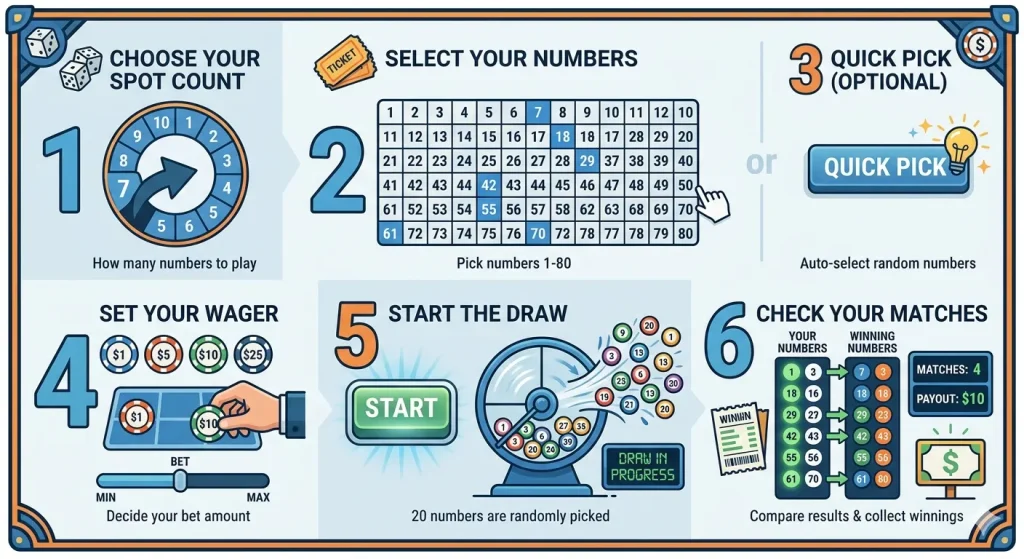
How to Play Keno Step by Step
If you’re playing Keno for the first time, follow these simple steps:
1. Choose Your Spot Count
Begin by deciding how many numbers you want to play.
Most online Keno games allow players to choose between 1 and 10 numbers, although some versions may offer additional Spot selections.
2. Select Your Numbers
Choose your preferred numbers from the grid containing numbers 1 through 80.
Some players use personal favorite numbers, while others choose randomly.
3. Use Quick Pick (Optional)
If you don’t want to select numbers manually, you can use the Quick Pick feature.
Quick Pick automatically generates random numbers for your ticket. It is purely a convenience feature and does not improve your chances of winning.
4. Set Your Wager
Choose the amount you wish to bet for the round.
In most Keno games, larger wagers increase the size of potential payouts.
5. Start the Draw
Once your selections and wager are confirmed, the draw begins.
Twenty numbers are randomly selected from the pool of 80 numbers.
6. Check Your Matches
After the draw is complete, compare the winning numbers with your selected numbers.
Your payout is determined by how many matches you achieve and the game’s paytable.
Understanding Keno Payouts
Keno payouts are based on three main factors:
- The number of Spots selected
- The number of matches achieved
- The wager amount
Different Spot selections have different payout structures.
For example, a 5-Spot ticket may reward players for matching 3, 4, or 5 numbers, while a 10-Spot ticket may include additional prize tiers.
One important thing to remember is that Keno paytables vary between game providers. The same number of matches may result in different payouts depending on the version being played.
Because of this, it is always a good idea to review the paytable before placing a wager.
Why Spot Selection Matters
Many beginners assume that selecting more numbers automatically improves their chances of winning.
In reality, Spot selection changes the balance between risk and reward.
Fewer Spots
Benefits include:
- Lower volatility
- More frequent winning combinations
- Smaller maximum payouts
More Spots
Benefits include:
- Larger prize potential
- Bigger multiplier opportunities
- Higher volatility
While larger Spot selections can lead to substantial prizes, they also make it more difficult to match all selected numbers.
Finding the right balance depends on your preferred playing style and budget.
Keno 8 vs Keno 10
Some online Keno providers offer multiple game variants, such as Keno 8 and Keno 10.
Keno 8
Characteristics often include:
- Up to 8 selected numbers
- Lower volatility
- More consistent gameplay
- Higher RTP in some versions

Keno 10
Characteristics often include:
- Up to 10 selected numbers
- Greater risk
- Higher reward potential
- Larger maximum payouts

Players who prefer steady gameplay may enjoy Keno 8, while those seeking larger prizes may prefer Keno 10.
RTP, Volatility, and Keno Odds Explained
In Keno, RTP, volatility, and odds help explain how the game works over time.
RTP (Return to Player) is the theoretical percentage of wagers paid back to players in the long run. It can vary depending on how many Spots you choose.
Volatility shows how often and how much the game pays:
- Low volatility = smaller, more frequent wins
- High volatility = larger, less frequent wins
Choosing more Spots usually increases volatility, as it raises the potential for bigger payouts.
Keno is also completely random. Every draw is independent, so past results do not affect future ones. This means:
- Quick Pick has the same odds as manual picks
- Lucky numbers don’t improve chances
- No strategy guarantees a win
Each round is random, and all outcomes are based on chance.
Additional Keno Features
Many online Keno games include optional features that add flexibility to gameplay.
Quick Pick
Quick Pick automatically selects random numbers for the player. This feature saves time but does not affect the odds of winning.
Consecutive Draws
Some Keno versions allow players to use the same number selection across multiple rounds. This eliminates the need to manually choose numbers before every draw.
Multipliers
Certain Keno games include optional multiplier features. These can increase potential winnings by multiplying payouts when specific conditions are met.
Multiplier options vary between providers, so always review the game rules before using them.
Tips for Beginners
If you’re just starting out, these tips can help improve your overall experience.
- Learn the Paytable – Always review the game’s paytable before playing. Understanding how prizes are awarded helps set realistic expectations.
- Start With Smaller Bets – Lower wagers allow beginners to become familiar with the game while managing their bankroll responsibly.
- Try Different Spot Counts – Experimenting with different Spot selections can help you find a balance between risk and reward.
- Use Quick Pick When Needed – Quick Pick is a convenient option for players who prefer not to select numbers manually.
- Set a Budget – Determine how much you’re willing to spend before playing and stick to that limit.
Common Keno Mistakes to Avoid
- Ignoring the Paytable – Different games use different payout structures. Always check the rules before placing a wager.
- Chasing Losses – Increasing wagers to recover previous losses can lead to poor bankroll management.
- Assuming Certain Numbers Are More Likely – Every number has the same chance of being drawn in each round.
- Choosing Too Many Spots Too Soon – Larger Spot selections may offer bigger prizes, but they also increase volatility.
- Playing Without a Budget – Setting spending limits helps maintain a more enjoyable gaming experience.
Play Keno Online on Dubai7
For players interested in trying Keno online, Dubai7 offers a user-friendly platform featuring a variety of number games, card games, live entertainment, slots, and sports betting options.
Available on both desktop and mobile devices, the platform allows players to enjoy smooth gameplay wherever they choose to play.
Play Dubai7 KENO
Choose your preferred way to start playing. Download the secure official app or register directly online.
KENO FAQs
Keno is a lottery-style number game where players choose numbers and win based on how many match the randomly drawn numbers.
You select 1–10 numbers (Spots), place a bet, and 20 numbers are drawn from a pool of 80. Winnings depend on how many matches you get.
In most Keno games, 20 numbers are drawn each round from a total of 80 numbers.
Spots refer to the number of selections you make. For example, choosing 5 numbers means playing a 5-Spot game.
No. Many Keno games pay for partial matches, not just full matches.
Quick Pick automatically selects random numbers for you. It does not improve your chances of winning.
No. Keno is fully random, and each draw is independent of previous results.
RTP (Return to Player) is the theoretical percentage of money returned to players over time, and it can vary based on Spot selection.
Choosing more numbers increases potential payouts but also makes it harder to match all selected numbers.
Keno is a game of chance. There is no strategy that guarantees winning.