Solitaire is a classic single-player card game enjoyed by millions worldwide. Whether you’re new to the game or looking to sharpen your skills, understanding the rules, strategies, and different Solitaire variations can help you play more effectively.
This guide covers everything you need to know to get started.
What Is Solitaire?
Solitaire is a classic single-player card game played with a standard 52-card deck. The objective is to move all cards to four foundation piles, building each suit from Ace to King.
Unlike multiplayer card games, Solitaire challenges players to solve a card-based puzzle using strategy, planning, and careful decision-making.
The game originated in Europe during the 18th century but became globally popular after being included in Microsoft Windows in the 1990s.
Today, Solitaire remains one of the most-played card games in both physical and digital formats, with numerous variations enjoyed by players worldwide.
How Solitaire Works
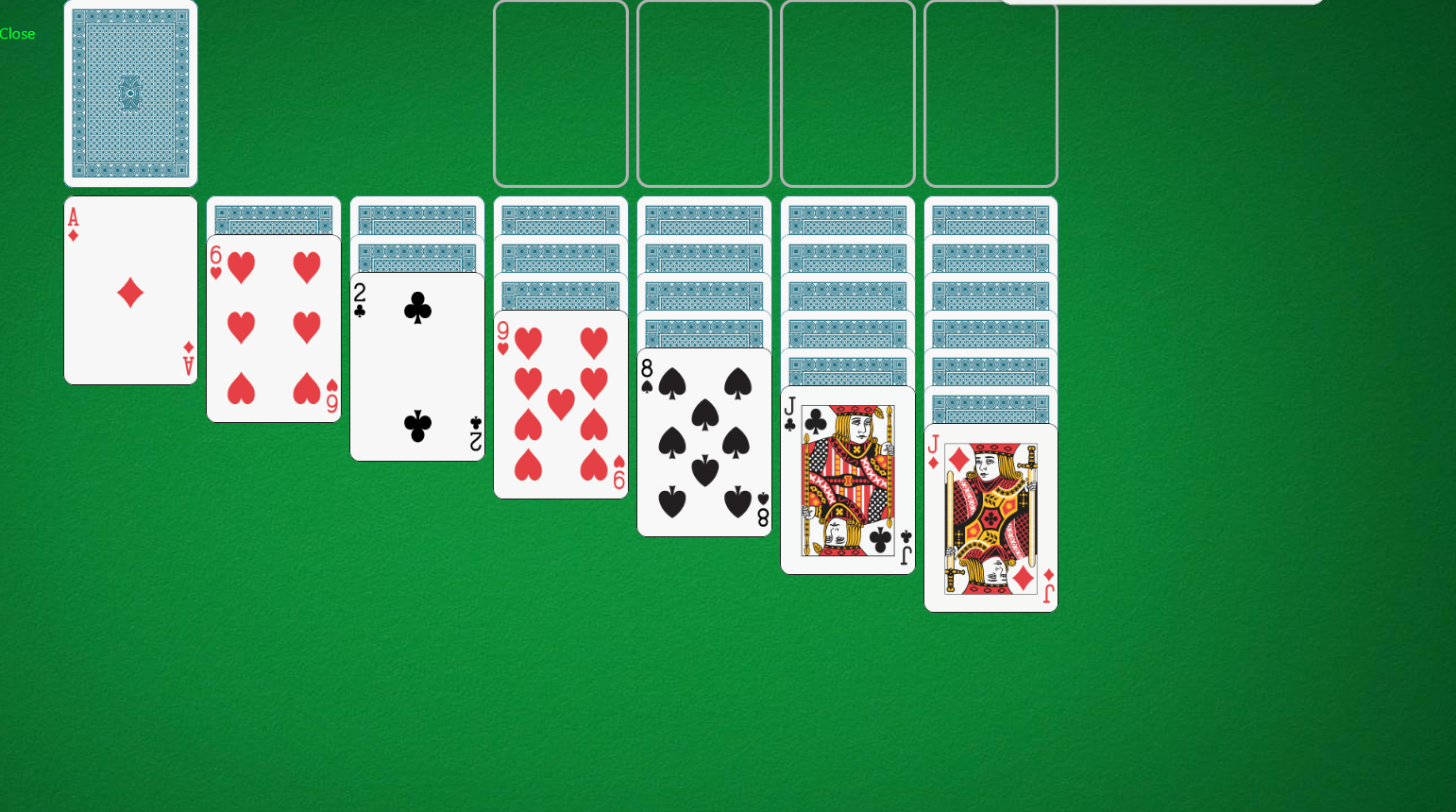
A standard game of Klondike Solitaire uses a 52-card deck and consists of four primary areas:
Tableau
The tableau contains seven columns of cards and serves as the main playing area.
Cards are arranged in a staircase pattern:
- Column 1 contains 1 card
- Column 2 contains 2 cards
- Column 3 contains 3 cards
- Column 4 contains 4 cards
- Column 5 contains 5 cards
- Column 6 contains 6 cards
- Column 7 contains 7 cards
Only the top card in each column begins face up.
Foundation Piles
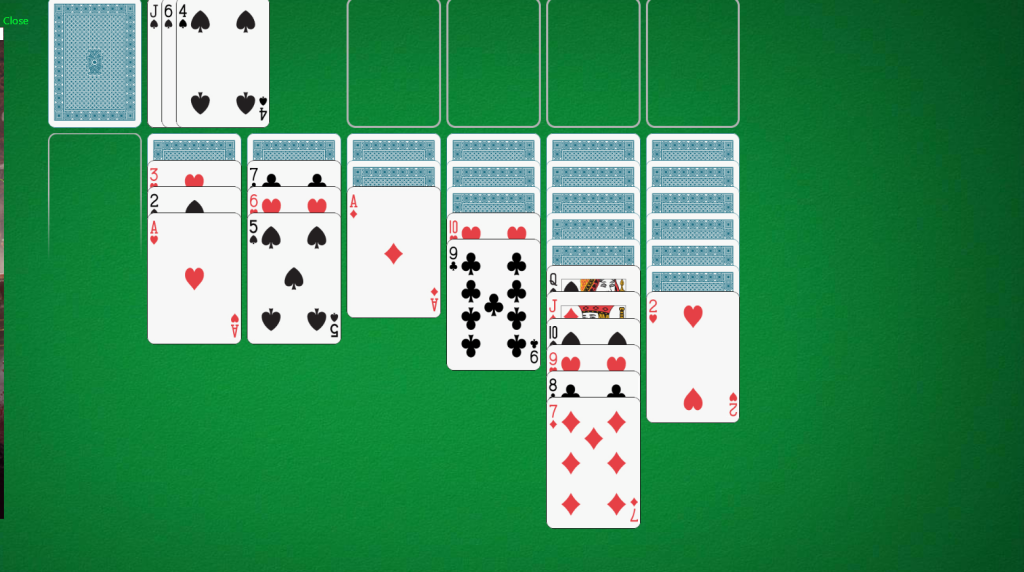
There are four foundation piles, one for each suit.
Players build these piles upward, starting with an Ace and continuing in sequence through King.
Stock Pile
The stock pile contains the remaining undealt cards.
Players draw cards from this pile when no useful moves are available in the tableau.
Waste Pile
Cards drawn from the stock pile that cannot be played immediately are placed in the waste pile.
These cards may become useful later as the game progresses.
Solitaire Rules
Understanding the core rules is essential for successful gameplay.
Build Down in the Tableau
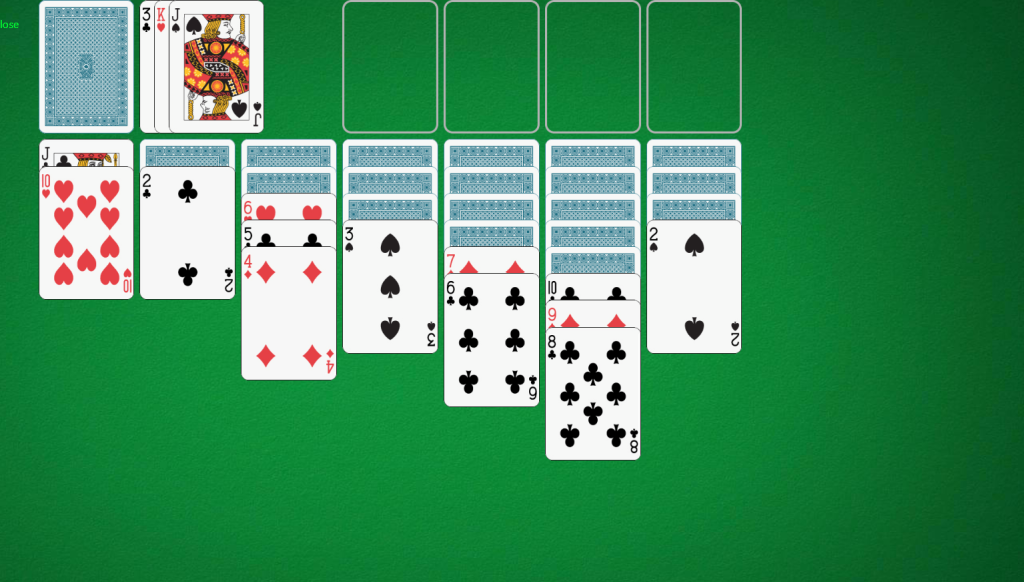
Cards in the tableau must be arranged in descending order.
For example:
- 8 on 9
- 7 on 8
- 6 on 7
Alternate Colors
Cards must alternate colors when placed in the tableau.
Examples include:
- Red 8 on Black 9
- Black 7 on Red 8
Placing a red card on another red card is not allowed.
Build Up in Foundations
Foundation piles begin with an Ace and continue upward by suit:
- Ace
- 2
- 3
- 4
- …
- King
Empty Columns
Only Kings can be placed in empty tableau columns.
This rule creates important strategic opportunities later in the game.
Reveal Hidden Cards
Whenever a face-up card is moved and exposes a face-down card beneath it, the hidden card is turned face up and becomes available for play.
How to Win Solitaire
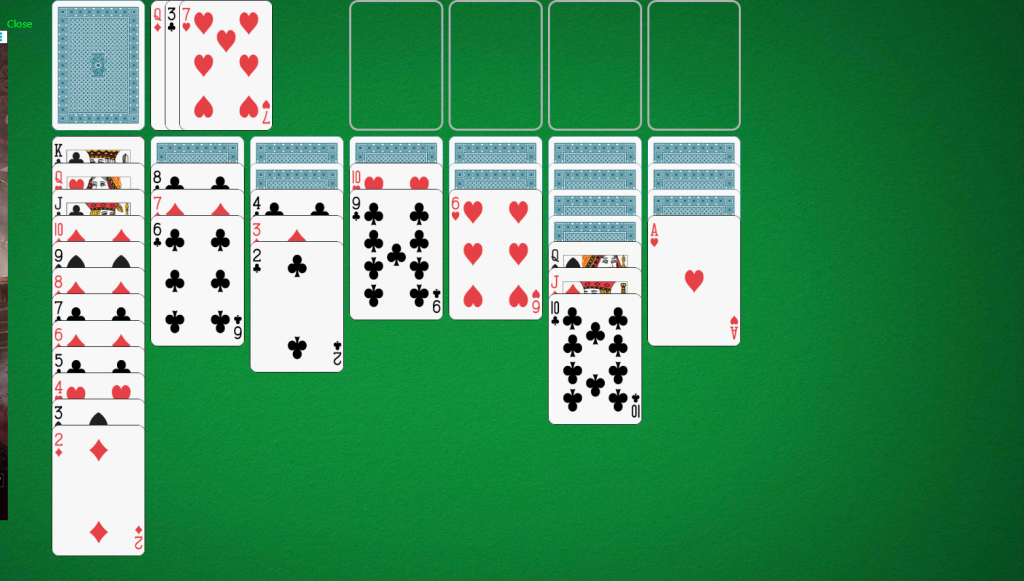
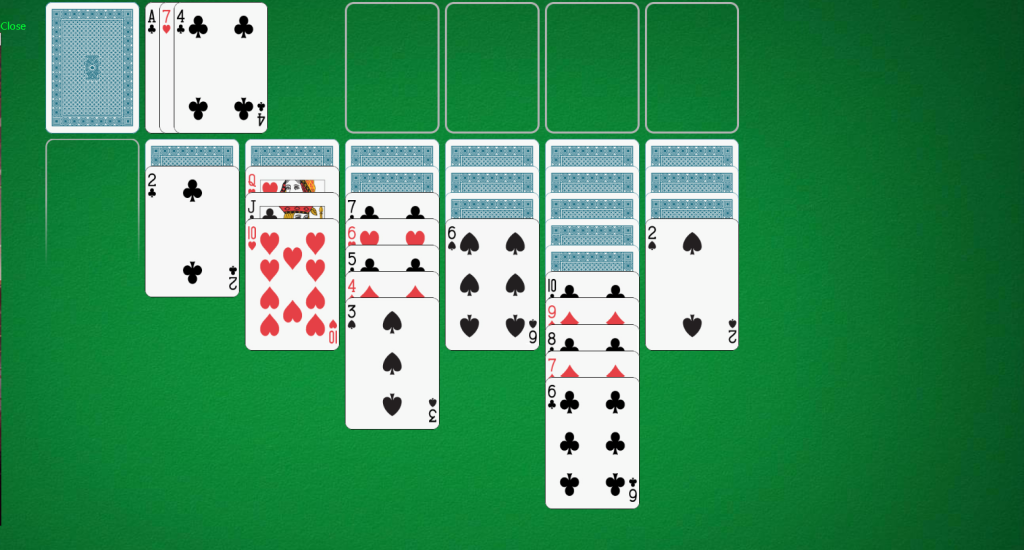
A game is won when all 52 cards have been successfully moved to the four foundation piles.
While the objective sounds straightforward, not every deal is winnable. Some card arrangements make victory impossible regardless of player skill.
However, strong strategic decisions can significantly improve long-term win rates.
Basic Solitaire Strategy
Many beginners rely on instinct when playing Solitaire, but experienced players follow proven strategic principles.
Reveal Hidden Cards Early
One of the most important objectives is uncovering face-down cards.
Each hidden card contains valuable information and potential future moves.
In most situations, revealing a hidden card should take priority over making a minor move elsewhere.
Create Empty Columns
Empty tableau columns provide flexibility and create new movement opportunities.
These spaces can be used to:
- Reorganize card sequences
- Move Kings strategically
- Access hidden cards
- Create additional future moves
Many experienced players consider empty columns one of the game’s most valuable resources.
Think Several Moves Ahead
Avoid focusing only on your next move.
Instead, consider how each decision affects future options.
Strong Solitaire players constantly evaluate multiple potential outcomes before committing to a move.
Manage the Stock Pile Carefully
Drawing cards from the stock pile can provide useful opportunities, but unnecessary draws may reduce future flexibility.
Use stock cards strategically rather than relying on them to solve every problem.
Advanced Solitaire Strategy
Once you’ve mastered the basics, advanced techniques can further improve your success rate.
Don’t Rush Cards to Foundations
Many beginners immediately move every available Ace and low card to the foundations.
While this may seem logical, doing so can sometimes limit future movement options within the tableau.
Keeping certain low-value cards accessible may help uncover hidden cards and create additional sequences.
Prioritize Information
Solitaire is partially a game of information management.
The more hidden cards you reveal, the better you can plan future moves.
When choosing between two legal moves, revealing new information is often the stronger option.
Treat Empty Spaces as Strategic Assets
An empty column is not simply a vacant area.
It functions as temporary storage that can dramatically increase your ability to reorganize the tableau.
Expert players actively work toward creating and preserving useful empty spaces.
Recommended Platform to Play Solitaire
For players looking to enjoy Solitaire online, Dubai7 provides a convenient gaming platform featuring a diverse selection of card games, slots, live casino experiences, and sports betting markets. The platform is optimized for both desktop and mobile play, allowing users to enjoy smooth gameplay wherever they are.
Combined with secure payment options and a simple sign-up process, Dubai7 offers an accessible environment for both new and experienced players.
Experience premium live card tables and gaming on Dubai7.
Common Solitaire Mistakes
| Common Mistake | Why It Hurts Your Game |
|---|---|
| Moving Cards Too Quickly | Rushing decisions can cause players to overlook better moves and future opportunities. |
| Ignoring Hidden Cards | Failing to reveal face-down cards limits information and reduces strategic flexibility. |
| Wasting Empty Columns | Empty tableau spaces are valuable resources that can help reorganize cards and create new moves. |
| Sending Cards to Foundations Too Early | Moving cards to foundations prematurely can sometimes trap useful sequences in the tableau and reduce available options. |
| Playing Without a Plan | Reacting only to immediate moves often leads to dead ends. Successful players think several moves ahead whenever possible. |
Popular Solitaire Variations
| Solitaire Variation | Description |
|---|---|
| Klondike Solitaire | The classic version that most players recognize and simply refer to as “Solitaire.” |
| Vegas Solitaire | A casino-style variation that uses a profit-based scoring system and rewards efficient play. |
| Spider Solitaire | Played with two decks and requires players to build complete suit sequences. |
| FreeCell | A highly strategic variation where almost every deal is theoretically winnable with perfect play. |
| Pyramid Solitaire | Players remove pairs of cards that add up to a value of thirteen. |
| TriPeaks Solitaire | Features three overlapping pyramid layouts and generally offers faster-paced gameplay. |
| Yukon Solitaire | Allows greater freedom when moving card groups and rewards advanced planning. |
Solitaire FAQs
Frequently Asked Questions
Most Solitaire games take between 5 and 15 minutes to complete, depending on the variation, player experience, and complexity of the card layout.
If no legal moves remain and no useful cards can be drawn from the stock pile, the game ends and a new deal must be started.
This rule helps maintain game balance and prevents players from creating overly flexible card arrangements that would make winning significantly easier.
Various speedrun and scoring records exist across different Solitaire versions, although records can vary depending on the rules, platform, and variation being played.
Spider Solitaire is widely regarded as the second most popular variation due to its increased complexity and deeper strategic gameplay.
Yes. Solitaire was originally designed as a physical card game and can be played using a standard 52-card deck without any digital device.
Its combination of simple rules, strategic depth, quick gameplay sessions, and accessibility across devices has helped Solitaire remain popular for generations.