Texas Hold’em is the world’s most popular poker game, played in online casinos, live poker rooms, and major tournaments worldwide. Its simple rules and deep strategic gameplay make it appealing to both beginners and experienced players.
In Texas Hold’em, players combine two private cards with five community cards to create the best possible poker hand. This guide covers everything you need to know, including rules, betting rounds, hand rankings, bluffing, position strategy, and beginner tips.
What Is Texas Hold’em?
Texas Hold’em is a community-card poker game where each player receives two private cards, known as hole cards, while five shared community cards are placed face-up on the table throughout the hand.
The objective is simple:
Create the best possible five-card poker hand using any combination of:
- Your two hole cards
- The five community cards
Players can also win a hand without showing cards if all opponents fold before the showdown.
What makes Texas Hold’em unique is the balance between luck and skill. While cards matter, long-term success depends heavily on:
- Position
- Timing
- Betting strategy
- Reading opponents
- Emotional control
- Probability-based decisions
This “easy to learn, difficult to master” structure is one of the main reasons Texas Hold’em became the king of modern poker.

Brief History of Texas Hold’em
Texas Hold’em is believed to have originated in Robstown, Texas, during the early 1900s before eventually spreading to Las Vegas in the 1960s. Over time, it became the centerpiece of professional poker tournaments, especially after the rise of the World Series of Poker (WSOP).
The game exploded globally during the online poker boom of the early 2000s. Televised tournaments, internet poker rooms, live streams, and online casinos introduced millions of new players to Texas Hold’em.
Today, it remains the most played poker format both online and offline.
How Texas Hold’em Hand Works
A standard Texas Hold’em table usually contains between 2 and 10 players. Every hand follows the same sequence.
1. Blinds Are Posted
Before cards are dealt, two forced bets are placed:
- Small Blind
- Big Blind
These mandatory bets create action and build the starting pot.
The dealer button rotates clockwise after every hand, changing blind positions and betting order continuously.
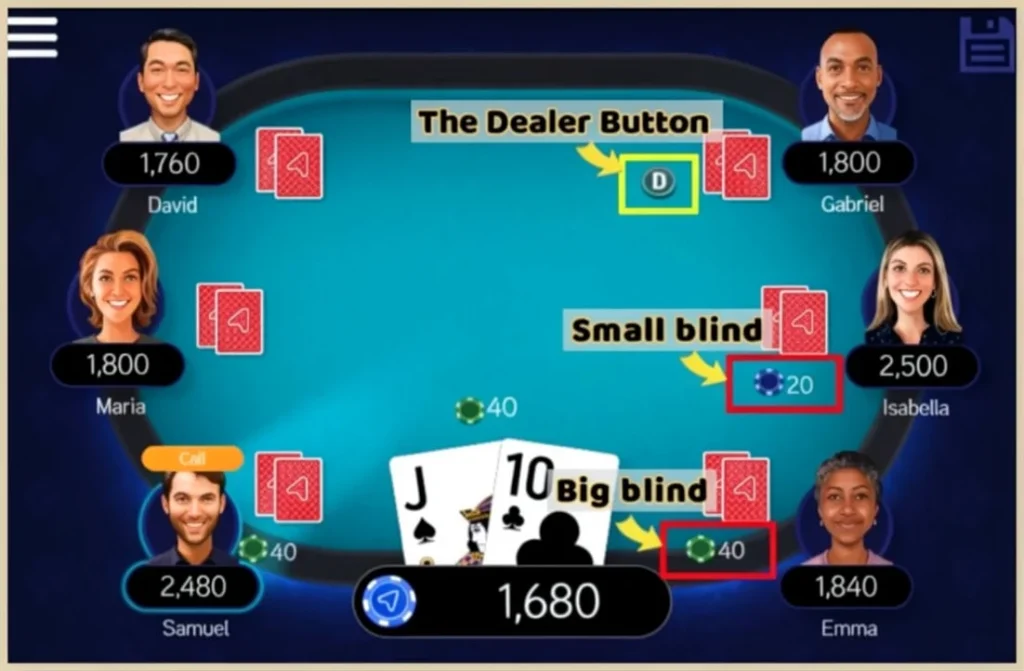
Why the Dealer Button Matters
Position is one of the most important concepts in poker.
Players who act later in the betting order gain more information before making decisions. This is called positional advantage.
The player on the dealer button acts last after the flop, which is considered the strongest position at the table because it allows:
- Better bluff opportunities
- More information gathering
- Improved pot control
- Stronger decision-making flexibility
Meanwhile, early-position players must usually play stronger starting hands because they act with less information.
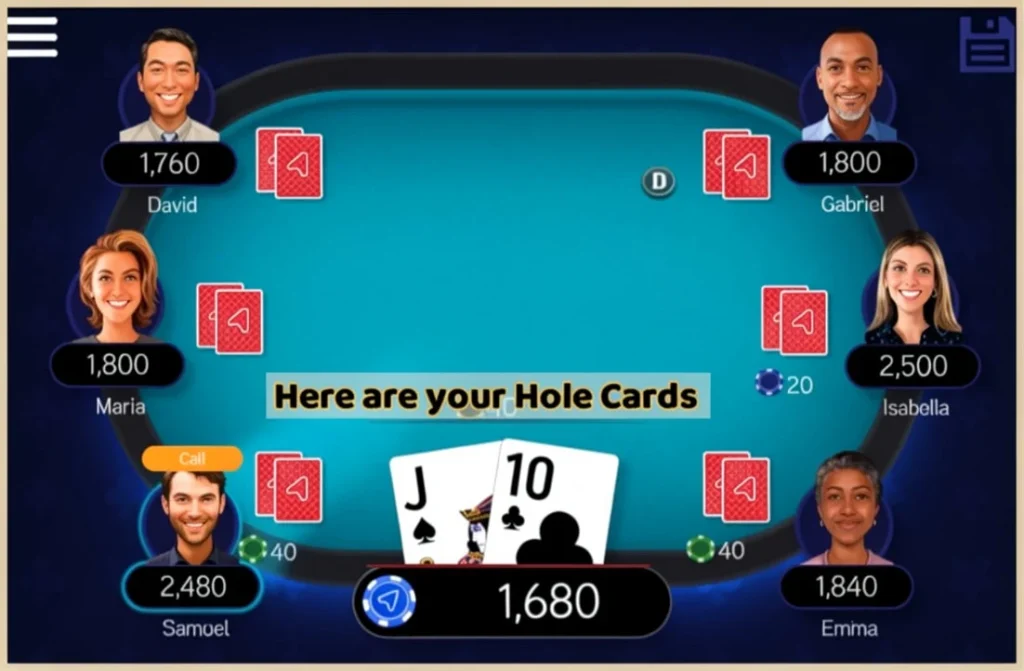
2. Hole Cards Are Dealt
Every player receives:
- Two private face-down cards
Only the owner of those cards can see them.
3. Pre-Flop Betting Round
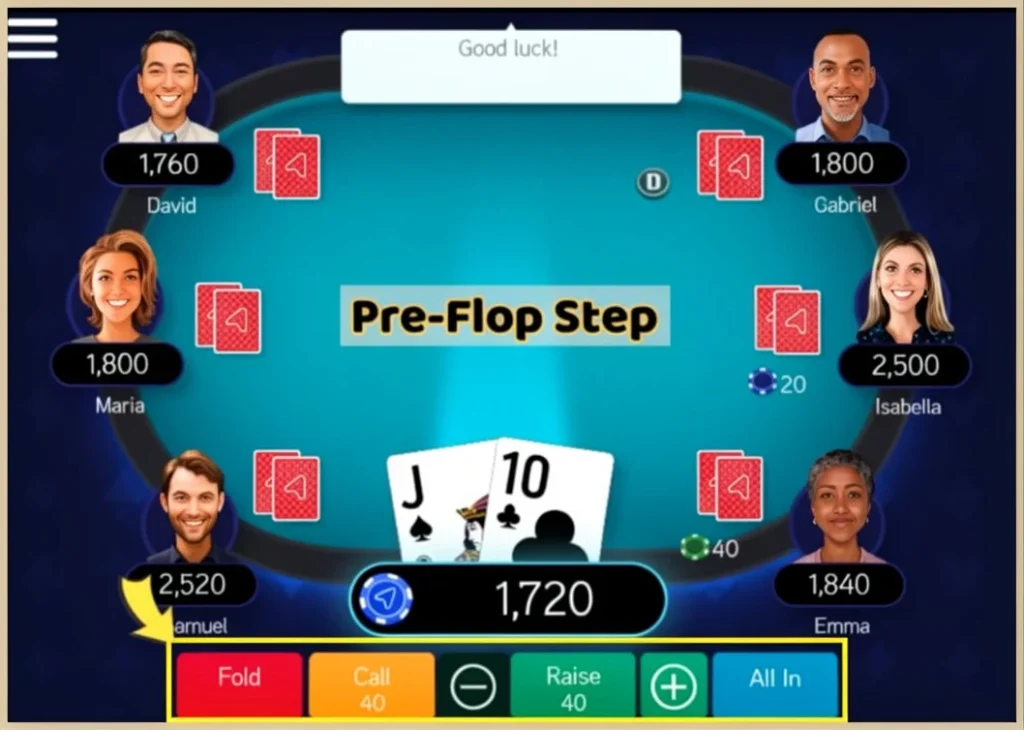
The first betting round begins immediately after the hole cards are dealt.
Players can:
- Fold
- Call
- Raise
The first player to act pre-flop is called “Under the Gun” (UTG), positioned immediately left of the big blind.
Because UTG acts first with minimal information, strong starting hands are generally recommended from this position.
4. The Flop
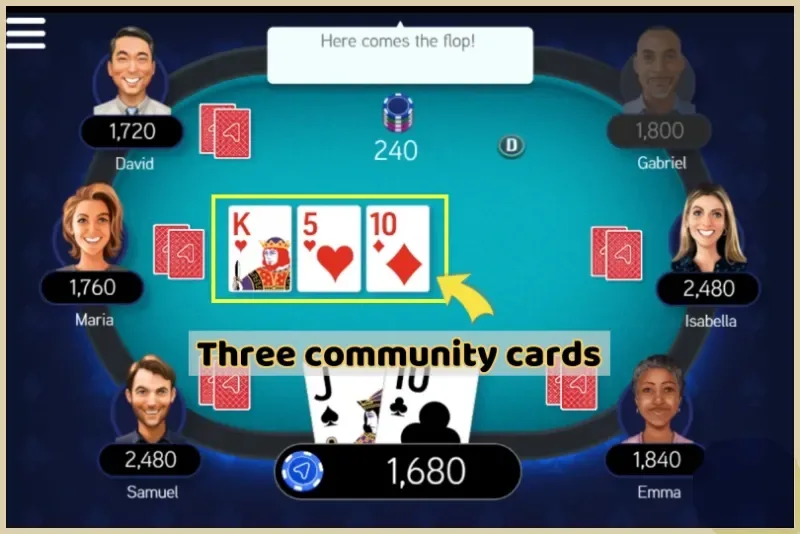
The dealer reveals three community cards face-up in the center of the table.
These cards are shared by every player.
A second betting round begins.
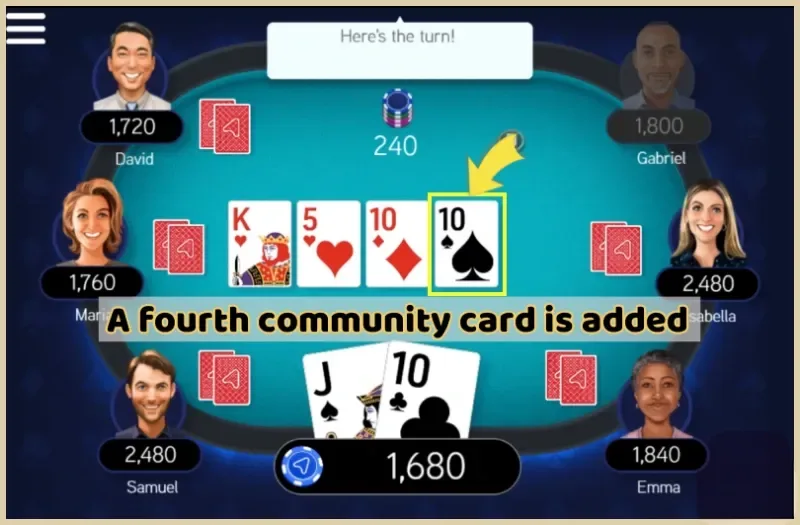
5. The Turn
A fourth community card is revealed.
Players now have access to six total cards:
- Two hole cards
- Four community cards
Another betting round follows.
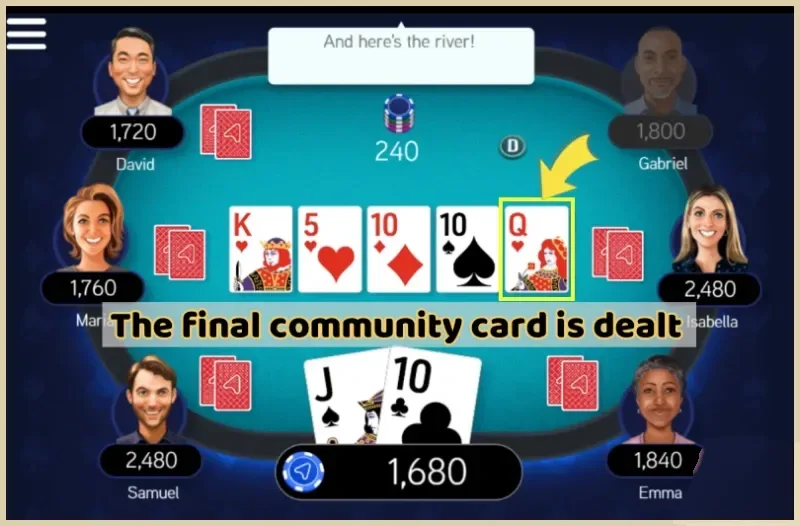
6. The River
The fifth and final community card appears.
This is the last stage of the hand before showdown.
A final betting round takes place.
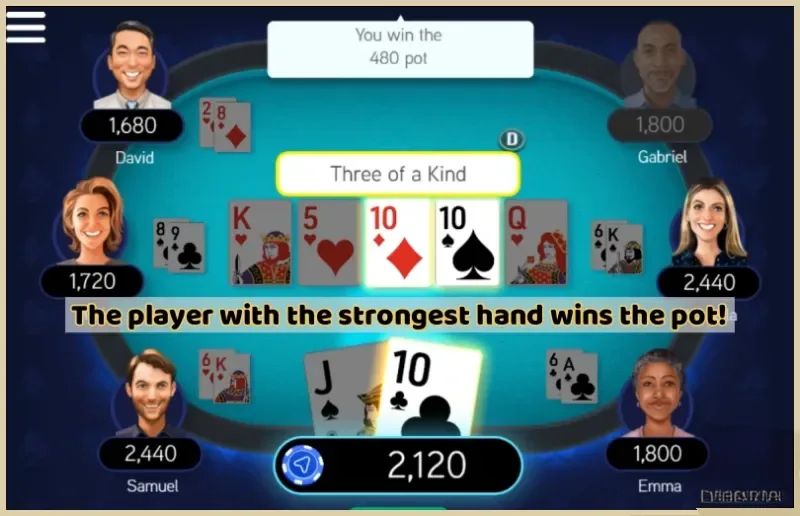
7. Showdown
If two or more players remain after the river betting round, cards are revealed.
The strongest five-card poker hand wins the pot.
Players may use:
- Both hole cards
- One hole card
- Or even none of their hole cards if the board itself forms the best hand
If players hold identical hand strength, the pot is split evenly.
Texas Hold’em Hand Rankings
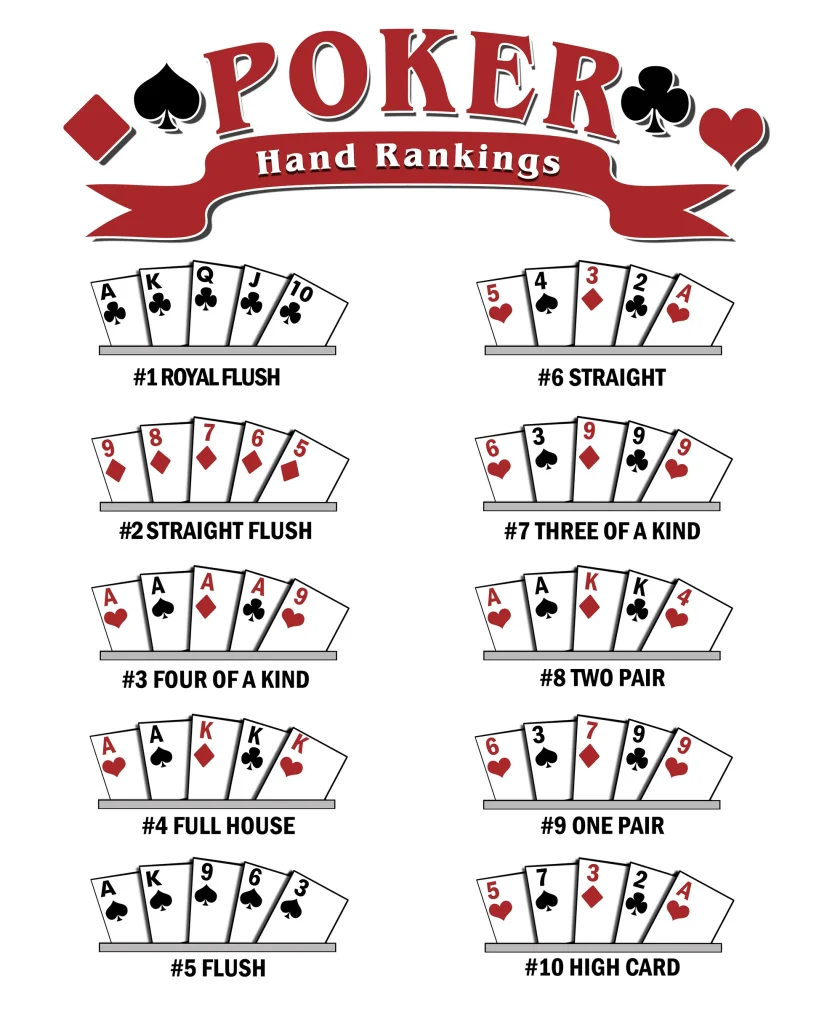
Understanding poker hand rankings is essential in Texas Hold’em. Below are the standard poker hands ranked from strongest to weakest.
| Rank | Hand | Description | Example |
|---|---|---|---|
| 1 | Royal Flush | A-K-Q-J-10 of the same suit | A♠ K♠ Q♠ J♠ 10♠ |
| 2 | Straight Flush | Five consecutive cards of the same suit | 9♥ 8♥ 7♥ 6♥ 5♥ |
| 3 | Four of a Kind | Four cards of the same rank | K♣ K♦ K♥ K♠ 7♣ |
| 4 | Full House | Three of a kind plus a pair | Q♠ Q♦ Q♣ 8♥ 8♠ |
| 5 | Flush | Five cards of the same suit | A♣ J♣ 9♣ 6♣ 2♣ |
| 6 | Straight | Five consecutive cards of mixed suits | 10♠ 9♦ 8♣ 7♥ 6♠ |
| 7 | Three of a Kind | Three cards of the same rank | 5♣ 5♦ 5♠ K♥ 9♠ |
| 8 | Two Pair | Two separate pairs | J♣ J♦ 4♠ 4♥ 9♣ |
| 9 | One Pair | Two matching cards | A♠ A♦ 10♣ 7♥ 3♠ |
| 10 | High Card | Highest single card when no hand is made | A♣ J♦ 8♠ 5♥ 2♣ |
If two players share the same hand ranking, the kicker determines the winner. For example, if both players have a pair of aces, the player with the higher side card wins.
Betting Options in Texas Hold’em
Every betting round gives players multiple choices.
Check
Pass the action without betting if no wager exists.
Bet
Place the first wager in the round.
Call
Match the current bet.
Raise
Increase the size of the current bet.
Fold
Discard your hand and exit the pot.
In No-Limit Texas Hold’em, players may bet any amount of their chips at any time, including going all-in.
Limit vs No-Limit vs Pot-Limit Hold’em
Texas Hold’em exists in several betting formats.
Limit Hold’em
Bet sizes are fixed and controlled.
This format is generally:
- Slower-paced
- Less volatile
- More mathematically structured
No-Limit Hold’em
The most popular version worldwide.
Players can wager any amount up to their full chip stack.
This format creates:
- Huge pots
- Aggressive bluffs
- High-pressure decisions
- Tournament drama
Pot-Limit Hold’em
Players may bet up to the current size of the pot.
This creates a middle ground between limit and no-limit gameplay.
Beginner Strategy Tips for Texas Hold’em
Many beginners assume poker is mainly about luck. In reality, strong poker players rely on discipline and decision-making.
Here are some of the most important beginner concepts.
Play Fewer Hands
One of the biggest beginner mistakes is playing too many weak hands.
Strong players fold often and wait for profitable situations.
Premium starting hands like:
- AA
- KK
- AK
are far more valuable than random weak cards.
Patience is a major weapon in poker.
Understand Position
Position affects nearly every decision in Texas Hold’em.
Late-position players gain:
- More information
- Better bluffing opportunities
- More control over pot size
Early-position players should generally play tighter and more carefully.
Many experienced players consider position even more important than cards themselves.
Tight-Aggressive Poker Is Best for Beginners
The most recommended beginner strategy is called Tight-Aggressive (TAG) poker.
This means:
- Playing fewer hands
- Entering pots with stronger cards
- Betting aggressively when involved
Passive players who constantly call without pressure often lose long-term.
Controlled aggression creates fold equity and forces opponents into difficult decisions.
Bluff Selectively
Bluffing is an important part of poker, but beginners often misunderstand it.
Good bluffing is not random aggression.
Successful bluffs depend on:
- Position
- Timing
- Opponent tendencies
- Board texture
- Table image
Professional players bluff strategically to represent believable strong hands.
Over-bluffing is one of the fastest ways for beginners to lose chips.
Learn Basic Probability Concepts
Texas Hold’em is heavily influenced by probability and risk management.
Strong players constantly evaluate:
- Pot odds
- Equity
- Drawing chances
- Risk versus reward
You do not need advanced mathematics to improve at poker, but understanding probability helps you make smarter long-term decisions.
Control Your Emotions
Emotional control is one of the most overlooked poker skills.
After losing several hands, many players begin making reckless decisions. This emotional state is called “tilt.”
Tilt often leads to:
- Chasing losses
- Over-bluffing
- Emotional all-ins
- Poor bankroll management
Winning poker players stay calm, disciplined, and patient even during losing streaks.
Bankroll Management Matters
Smart bankroll management protects players from unnecessary losses.
Good bankroll habits include:
- Playing stakes you can comfortably afford
- Avoiding emotional gambling
- Never risking your full balance recklessly
- Accepting that variance exists in poker
Even professional players experience losing sessions. Long-term discipline matters far more than short-term results.
Tournament vs Cash Games
Texas Hold’em is commonly played in two formats.
Cash Games
- Chips represent real money directly
- Players can join or leave anytime
- More flexibility exists
Tournaments
- Players receive fixed starting stacks
- Blinds increase over time
- Elimination pressure exists
- Survival becomes important strategically
Tournament poker often creates more dramatic all-in moments and high-pressure decisions.
Common Beginner Mistakes in Texas Hold’em
Many new players make the same errors repeatedly.
- Playing Too Many Hands
Weak starting hands create expensive situations.
- Ignoring Position
Acting early without strong cards is dangerous.
- Bluffing Too Often
Good bluffs require logic and timing.
- Calling Too Much
Passive calling usually loses value long-term.
- Refusing to Fold
Strong players fold frequently.
- Chasing Losses
Emotional poker destroys bankrolls.
- Ignoring Opponent Tendencies
Poker is about observing patterns and adapting.
Avoiding these mistakes alone can improve beginner performance dramatically.
Best Platform to Play Texas Hold’em
Dubai7 is a growing online casino platform that caters to Indian players with a wide selection of JILI slot games, live casino tables, and sports betting.
The platform is accessible on both mobile and desktop devices, with encrypted transactions and a straightforward registration process.
Experience premium live poker tables and gaming on Dubai7.

Texas Hold’em FAQs
Essential answers to common questions about Texas Hold’em rules, timing, and strategy.